Female Muslim Praying on the Carpet
A Thoughtful, Respectful Embroidery Design for Purpose-Driven Brands
As an embroidery designer who’s developed hundreds of commercial designs for small businesses—from neighborhood bakeries to faith-centered boutiques—I approached Female Muslim Praying on the Carpet with both professional scrutiny and cultural sensitivity. This isn’t just another decorative motif. It’s a quiet, reverent image rooted in devotion—and that intentionality matters deeply when translating it into branded merchandise.
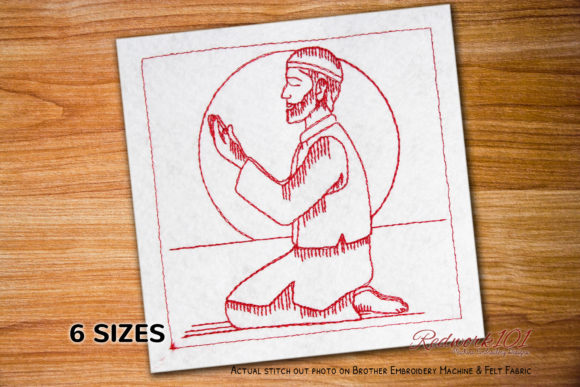
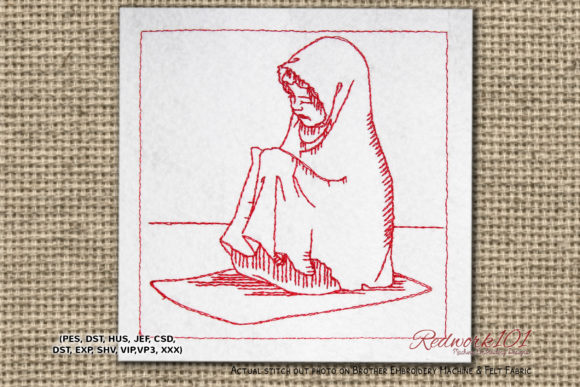
At first glance, the title signals clarity and reverence: no stylized abstraction, no symbolic shorthand—just a grounded, human moment of worship. That directness reads as professional, elegant, and sincere—not flashy or trendy, but timeless. The optional Box Stitch (as noted in the description) adds subtle structure without overpowering; when used, it frames the scene like a miniature illuminated manuscript—ideal for patches or chest logos where visual hierarchy matters.
Where Female Muslim Praying on the Carpet Shines in Small Business Merch
This design excels where authenticity and quiet dignity elevate brand perception. Imagine it stitched onto:
- A linen apron for a halal-certified café—soft thread colors mirroring their earth-toned uniforms, reinforcing values without words;
- A woven patch sewn onto tote bags sold at a local Islamic bookstore or community center—immediately legible, respectful, and cohesive with their mission;
- The sleeve of staff uniforms at a wellness studio or holistic clinic serving diverse clients—subtle yet meaningful, signaling inclusivity and spiritual awareness;
- A limited-run embroidered cap for an Eid pop-up market—clean, centered, and dignified, standing apart from generic graphic tees;
- Product packaging accents for handmade soaps or candles from a Muslim-owned artisan brand—adding sacred resonance to everyday self-care items.
Because it avoids excessive detail or tight linework, Female Muslim Praying on the Carpet holds up beautifully across fabric types and scales. It’s inherently adaptable for custom apparel, apron embroidery, cap embroidery, and tote bag design—especially when paired with complementary typography or minimal border elements.
Use With Intention: Key Considerations for Real-World Production
Respect begins with execution. While this machine embroidery design carries warmth and clarity, its impact depends on thoughtful application:
- Small patch sizes (under 2.5”): The figure’s posture and carpet detail remain readable down to ~1.75”, but avoid shrinking further—key outlines may blur, especially on textured fabrics like twill or canvas.
- Cap fronts and curved surfaces: Test hoop placement carefully—the composition’s vertical balance works best on flat or gently curved areas. Avoid stretching over deep crowns unless digitized with stretch compensation.
- Dark uniforms and high-wear items: Prioritize high-contrast thread colors (e.g., ecru on navy, charcoal on cream). Confirm stitch density aligns with laundering frequency—overly dense fills risk stiffness and cracking after repeated washes.
- Fabric texture and stabilizer choice: On loosely woven or napped fabrics (like fleece or unlined denim), use cutaway + tear-away combo stabilizer. The design’s clean silhouette benefits from firm backing to prevent shadowing or puckering.
How It Strengthens Brand Identity and Customer Trust
For small business owners building intentional brands—whether faith-aligned, community-rooted, or values-led—Female Muslim Praying on the Carpet does more than decorate. It communicates alignment. When customers see this image thoughtfully placed on an apron, tote, or product tag, they recognize care—not just in craft, but in representation.
That builds trust. It tells Muslim customers: “You belong here.” It tells allies: “This space honors diverse expressions of faith.” And it tells collaborators: “This brand operates with integrity and aesthetic discipline.” Visually, it elevates perceived value—handmade product feels more considered, boutique merchandise more curated, and event merch more memorable.
Crucially, it supports visual consistency. Unlike trend-dependent graphics, this design pairs effortlessly with neutral palettes, serif or clean sans-serif typography, and natural materials—making it a reliable anchor across digital embroidery file collections, printable mockups, and physical design assets.
Practical Designer Notes Before You Stitch
Before sending Female Muslim Praying on the Carpet to production—or offering it to clients—run these checks:
- Test the embroidery file in black and white first. Does the silhouette retain clarity? Are negative spaces balanced?
- Resize it to your smallest intended patch size (e.g., 1.5”) and inspect spacing between limbs, carpet edges, and head coverage. Adjust if needed.
- Review thread color contrast against your base fabric. A soft gold thread on beige linen reads warmly—but may vanish on oatmeal cotton. Always sample.
- Confirm hoop size compatibility. If the design exceeds standard 4x4 hoops, verify your machines support larger formats—or plan for re-hooping.
- Stitch a test run on the exact fabric you’ll use. Thread tension, needle type, and stabilizer all shift final appearance.
- Create a printable mockup for client approval—context matters. Show it on an apron, not just a white square.
- Compare it beside your other design assets. Does it harmonize tonally and proportionally with existing logos or patterns?
- Verify commercial licensing. Since this falls under Religion and Embroidery categories, confirm usage rights cover resale, branded patches, and small business merch—not just personal projects.
Remember: the optional Box Stitch isn’t just decorative—it’s functional framing. Use it to unify layout across multi-item campaigns (e.g., matching patches for staff and tote bags), or omit it for a softer, more integrated look on curved garments.
When executed with attention to material, scale, and meaning, Female Muslim Praying on the Carpet becomes more than a digital embroidery file. It becomes a quiet statement—one that resonates across counters, cafes, classrooms, and community spaces. For small business owners and embroidery shops alike, that’s not just smart branding. It’s stewardship.