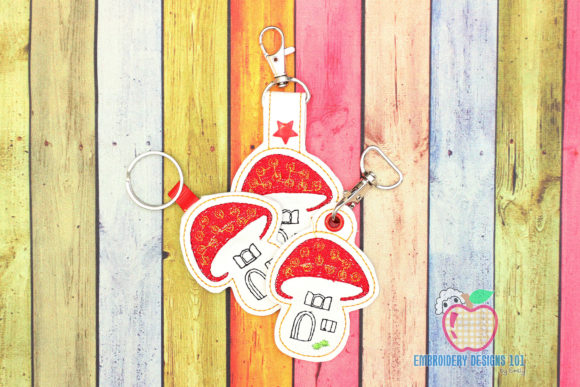
Mushroom House ITH Keyfob
First Impressions: Whimsy That Stitches Well
Opening the Mushroom House ITH Keyfob file, I immediately felt that quiet spark of recognition—the kind you get when a design lands right in your creative sweet spot. It’s not overly busy, but it’s rich with character: a rounded mushroom cap with subtle gills, a tiny door and window, and soft organic curves that suggest warmth, safety, and storybook charm. As an embroidery designer who’s stitched hundreds of Fairy Tales-themed pieces for clients and small shop launches, I know how easy it is for “cute” to tip into cluttered or flat. This one doesn’t. Its layout respects negative space, its proportions hold up at 2.5–3 inches (a typical keyfob scale), and its visual personality leans gently nostalgic—not saccharine, not ironic, just quietly inviting.
Real-World Test: From Mockup to Market
Last week, I used Mushroom House ITH Keyfob as the centerpiece on a set of linen tea towels for a local boutique launch. We stitched it onto the lower corner—just above the hem—with a light tear-away stabilizer and 40-weight cotton thread. The result? A finished product that looked handmade *without* looking handmade-*in-a-rushed-way*. Customers paused at the display, smiled, and picked them up to feel the texture. That’s the quiet power of this machine embroidery design: it reads as intentional, not decorative filler. It works equally well on baby onesies (paired with soft pinking shears and gentle wash instructions), embroidered patches for denim jackets, or even as a subtle accent on the chest of a unisex sweatshirt—especially when paired with neutral thread tones like moss green, warm taupe, or cream.
Where It Shines—and Where to Pause
Mushroom House ITH Keyfob excels in projects where storytelling meets utility: personalized gifts (think “Grandma’s Garden” keychains for Mother’s Day), nursery decor (stitched onto a muslin wall hanging), or small-batch craft fair merchandise (like mini hoop art or embroidered leather tags). It holds up beautifully on medium-weight cotton, canvas, and stable knits—especially when backed with appropriate cut-away or tear-away stabilizer. But I’d avoid using it straight onto thin rayon blends or highly stretchy jersey without testing first; the satin stitch cap edge can pucker if tension isn’t dialed in. On dark fabric, make sure your top thread has enough contrast—lighter greens or creamy whites read best. And while it fits comfortably in a 4x4 hoop, don’t push it into a 3x3 unless you’re willing to sacrifice some of the window detail clarity.
Design Integrity in Action
What makes Mushroom House ITH Keyfob stand out isn’t just its theme—it’s how thoughtfully the fill stitch and satin stitch areas are balanced. There’s no over-digitized density in the stem, no fragile running stitch outlines that vanish after two washes. The door and window are sized just right to stay legible without demanding micro-hooping. That translates directly to customer trust: when someone buys a handmade product featuring this embroidery file, they’re not just buying a mushroom—they’re buying consistency, durability, and a sense of care baked into every pass of the needle.
Practical Designer Notes You’ll Actually Use
- Always test first—not just on scrap fabric, but on the *exact* fabric-and-stabilizer combo you plan to use. Linen behaves differently than quilting cotton, and a tea towel’s weave changes how fill stitches settle.
- Check thread color contrast early. Print a black-and-white mockup before stitching. If the cap and stem blur together in grayscale, adjust thread values before committing.
- Review stitch density—especially if you’re layering this with text or another motif. Too much density too close to the edge can cause distortion on curved surfaces like caps or tote bag straps.
- Confirm hoop size compatibility with your machine and intended product. Some versions of this embroidery file may include multiple sizes—verify which one matches your project scope.
- Inspect small details under magnification if possible. The tiny window frame should be crisp, not merged or frayed. If it’s not, re-hoop and double-check tension.
- Use proper stabilizer—especially for lightweight fabrics or high-thread-count linens. A single layer of medium-weight cut-away often saves more time than troubleshooting puckering later.
- Verify licensing before listing finished items on Etsy or using Mushroom House ITH Keyfob in commercial embroidery services. Not all embroidery file licenses permit resale of physical products.
More Than a Keyfob—It’s a Branding Touchpoint
I’ve seen Mushroom House ITH Keyfob elevate entire product lines—not because it’s flashy, but because it’s cohesive. A small business selling botanical-themed kitchen goods used it across tea towels, aprons, and reusable produce bags. Customers began recognizing the motif as part of the brand’s visual language. Same with an Etsy seller specializing in woodland baby gear: stitching Mushroom House ITH Keyfob onto burp cloths and milestone blankets created a subtle throughline customers loved. It doesn’t shout—it invites. And in today’s handmade market, that kind of quiet resonance builds loyalty faster than any trend-driven graphic ever could.
Final Thought: Design That Grows With You
This isn’t just another embroidery file you download and forget. Mushroom House ITH Keyfob is versatile enough for your first custom apparel order and refined enough for your tenth boutique collaboration. It works for hobbyists wanting joyful weekend stitching and for craft business owners building recognizable design assets. It fits naturally into the Embroidery category without forcing itself—and when paired with thoughtful thread choices, smart stabilizing, and real-world testing, it delivers exactly what handmade creators need: reliability, charm, and quiet professionalism, one stitch at a time.