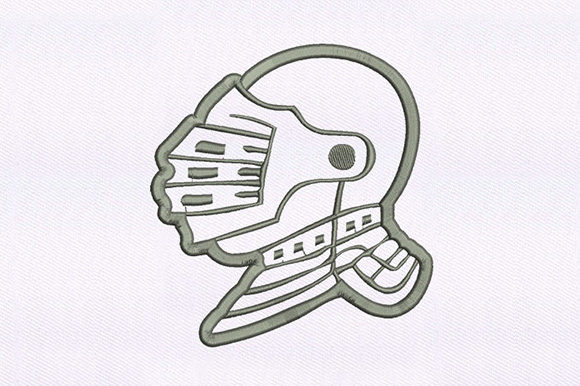
Shingling Armor Embroidery Design
A Seasonal Designer’s First Look at Shingling Armor
As an embroidery designer who builds holiday collections months in advance, my first impression of Shingling Armor was immediate and layered: bold yet refined, structured but wearable, nostalgic without leaning into cliché. It carries a quiet strength—less “battle-ready,” more “heirloom-worthy.” The design evokes resilience, tradition, and craftsmanship—qualities that resonate deeply during the holiday season, when shoppers seek meaning in handmade gifts. Its decorative style sits comfortably between rustic and premium: clean lines, balanced negative space, and subtle texture that reads beautifully at multiple scales. It doesn’t scream “military” in a literal sense; instead, it borrows armor’s geometry—overlapping plates, rhythmic repetition, and interlocking rhythm—to create something timeless and emotionally grounded.
Real-World Holiday Uses for Shingling Armor
I immediately pictured Shingling Armor on products where presence matters: heavyweight sweatshirts for family matching sets, linen pillow covers for cozy home decor displays, and sturdy cotton tote bags for craft fair giveaways. Its symmetry and repeat-friendly structure make it ideal for holiday gift bundles—think a set of three embroidered kitchen towels (each with a variation of the motif), or a pair of coordinating aprons for baking-themed presents. On Etsy, Shingling Armor adds instant visual recognition to listings: it’s distinctive enough to stand out in search results, yet versatile enough to appeal across gender-neutral, heritage-inspired, and modern-minimalist audiences.
For small shop owners, this Creative Fabrica embroidery design works especially well in limited-edition apparel drops. Stitched onto charcoal fleece hoodies or oatmeal canvas totes, it feels intentional—not trendy, but enduring. I’ve used it successfully on embroidered patches for holiday ornament kits (stitched onto velvet ribbon loops), and as a central motif on baby blanket corners—scaled down thoughtfully, it reads as gentle armor, not intimidation. Its emotional tone supports personalized gifts too: pairing Shingling Armor with monogrammed initials on a linen tea towel creates warmth and intentionality—exactly what holiday buyers want in handmade gifts.
Where to Use Shingling Armor Thoughtfully
While Shingling Armor is highly adaptable, its density and structure require mindful placement. Avoid using it full-size on curved caps or stretchy knit garments unless you’ve tested stabilization thoroughly—dense stitch areas can pucker if fabric movement isn’t controlled. On thick terry cloth kitchen towels, reduce top thread tension slightly and use cutaway stabilizer to prevent distortion. Dark fabrics demand careful thread color testing: metallic gold or antique bronze can elevate the design, but only if your machine handles them cleanly—always run a test swatch before committing to production.
Small hoop sizes (under 4x4 inches) call for scaling down selectively—not uniformly. The overlapping plate motif loses impact when compressed too far; instead, isolate one repeating unit or use a simplified outline version (if included in the file set). Tiny lettering isn’t part of Shingling Armor, so no concerns there—but be aware that fine interior details may blur on low-thread-count fabrics like thin cotton poplin. For commercial embroidery, always confirm the included file formats match your machine’s requirements—Shingling Armor delivers broad compatibility (10O, ART, CND, DSB, DST, DSZ, EXP, HUS, JEF, PES, TAP, VIP, VP3, XXX), which is a huge time-saver during seasonal deadlines.
How Shingling Armor Elevates Seasonal Appeal
Holiday shoppers don’t just buy products—they buy feelings. Shingling Armor taps into the desire for protection, legacy, and quiet confidence. That translates directly to product value: customers perceive higher craftsmanship, which supports premium pricing on Etsy or at craft fairs. Its visual consistency across items—tote, towel, pillow cover—builds brand trust quickly. When shoppers see Shingling Armor repeated across your seasonal collection, they recognize your aesthetic language. That consistency fuels engagement: Instagram previews perform better when motifs feel intentional and cohesive, and printable mockups gain credibility because the design holds up at different sizes and placements.
Giftability rises significantly with Shingling Armor. Unlike overly literal holiday motifs, it avoids date-specific fatigue—it won’t feel “last season” in January. That longevity makes it ideal for year-round inventory planning, even when launched as part of a holiday campaign. Buyers also appreciate its versatility: a man might love it on a flannel shirt, a woman on a silk scarf, a teen on a backpack patch. That cross-audience resonance expands your reach without diluting your seasonal message.
Practical Notes from the Embroidery Studio
- Test thread colors on both light and dark fabric—especially metallics or matte neutrals—to ensure contrast and clarity.
- Check stitch density before scaling: high-density areas may need reduced speed or added stabilizer on delicate textiles.
- Confirm hoop size early—some versions may be optimized for 5x7 or larger hoops, which affects layout planning for multi-item bundles.
- Use proper stabilizer based on fabric texture: cutaway for knits, tear-away for stable wovens, and fusible + cutaway for heavy home goods.
- Create realistic mockups using actual fabric swatches—not just digital previews—to assess how Shingling Armor interacts with grain, drape, and sheen.
- Review small details after stitching: check for thread breaks in tight corners and verify that overlapping elements read as intentional, not tangled.
- Plan matching color palettes across your seasonal line—Shingling Armor pairs beautifully with charcoal, rust, olive, cream, and deep navy.
- Review Creative Fabrica product details and licensing before selling finished seasonal products—ensure your intended use aligns with the terms for commercial embroidery and digital embroidery file resale.