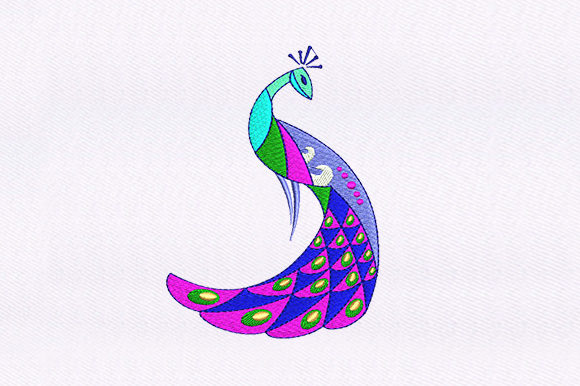
Art Deco Peacock Design
First Impressions: Bold and Elegant
The Art Deco Peacock Design immediately commands attention with its geometric precision and luxurious flair. It feels both modern and timeless, blending the opulence of peacock feathers with the clean lines of Art Deco architecture. This design is not just a pattern—it's a statement. Its boldness makes it ideal for craft fair displays where visual impact is key.
Visual Appeal on Craft Fair Products
When applied to tote bags, aprons, and tea towels, the Art Deco Peacock Design becomes a focal point that draws customers in. The intricate detailing and symmetrical layout make it perfect for larger products like tote bags and pillow covers, where the design can be showcased without being overwhelming. On smaller items like embroidered patches or fabric pouches, it works as a striking accent, adding a touch of sophistication to otherwise simple items.
Performance on Key Craft Fair Items
For tote bag designs, the Art Deco Peacock Design offers a premium look that aligns well with farmhouse and boutique aesthetics. On aprons, it adds an elegant touch that appeals to both home cooks and fashion-forward buyers. Tea towel embroidery benefits from the design’s clarity and contrast, making it easy to spot in a busy market. Embroidered patches and fabric pouches are also excellent carriers of this design, especially when paired with neutral or earthy fabrics.
Market bags and handmade gifts can carry the Art Deco Peacock Design as a signature element, helping to build brand recognition. Booth samples should include at least one large-scale application to demonstrate the design’s versatility and visual strength. Printable mockups are essential for Etsy sellers and digital creators to ensure the design translates well across different product types and fabric textures.
Practical Selling and Production Considerations
The Art Deco Peacock Design is straightforward to understand at a glance, which is crucial for attracting first-time buyers. It works well as both a small accent and a large focal design, offering flexibility for different product sizes. However, photographers should be aware that the design may lose some detail when scaled down, especially on dark or textured fabrics like thick cotton or wool.
For batch production, the design’s repeatable nature is a plus. It can be easily adapted to various product lines, ensuring consistency across multiple items. However, designers should test the embroidery file on scrap fabric to confirm stitch density and thread colors before mass production. Checking hoop size and stabilizer type is also important to prevent puckering or distortion on curved surfaces like caps or textured towels.
Careful Use Notes for Embroidery Designers
While the Art Deco Peacock Design is visually stunning, it does have areas that require careful handling. Dense stitch sections can be challenging on thick or textured fabrics, so using the right stabilizer is essential. Tiny details and small lettering may not show up clearly on dark or low-contrast fabrics, so testing on different materials is a must.
Designers should also consider how the design looks on commercial embroidery machines versus home units. Ensuring that the embroidery file includes all necessary formats (such as DST, PES, and VIP) will help Etsy sellers and small shop owners deliver high-quality finished products. Confirming commercial licensing is another critical step before selling any item featuring the Art Deco Peacock Design.
Impact on Customer Engagement and Brand Consistency
The Art Deco Peacock Design has the potential to elevate a brand’s image by introducing a sense of luxury and craftsmanship. Its unique aesthetic appeals to customers looking for handmade products that stand out in a crowded market. By consistently applying this design across various craft fair products, sellers can create a cohesive brand identity that resonates with their target audience.
Customer attention is likely to increase when the design is used on items like pillow covers, market bags, and embroidered patches—products that are often displayed prominently in booth setups. The design’s visual appeal enhances product value, making it easier for buyers to justify purchasing handmade items over mass-produced alternatives.
Embroidery Designer Tips for Success
As an experienced designer, I recommend starting with a printable mockup to visualize how the Art Deco Peacock Design will look on different products. Test the embroidery file on scrap fabric to check stitch density and thread colors, and ensure that the hoop size is appropriate for the product type. Using the right stabilizer is crucial, especially on curved or textured surfaces like caps and towels.
Always create at least one real mockup before mass production to catch any issues early. Compare fabric colors carefully, as certain hues may alter the design’s appearance. Finally, confirm commercial licensing terms to avoid legal complications when selling finished products. With these steps, the Art Deco Peacock Design can become a standout feature in your craft fair lineup.